AI and Journal Editing: The Erosion of Trust
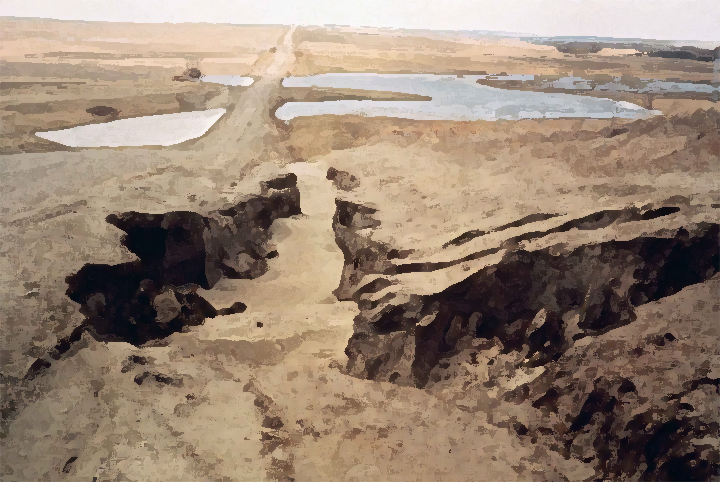

One of the biggest current challenges for journal editors is wrestling with developing AI policies that balance the ubiquity of generative AI use by scholars (and in some cases editors) and the ethical considerations of how such use is impacting the scholarship itself. That is to say, we have strong evidence that Generative AI use is polluting the scholarly record by adding nonexistent references—and each one of those that makes it through the publication process becomes realized into an authoritative source because it has now been published and is much more likely to be cited. Even though the referenced work doesn't exist at all, it is findable via Google Scholar searches and when searching the literature using a genAI tool like ChatGPT, Claude, or Perplexity.
As the number of vaporware citations increases, the amount of trust that readers have in the scholarly enterprise will start to decline—even more than it already has, under repeated attacks from the anti-intellectual political parties that are vying for power in many parts of Europe and the US. On social media, there's a general sense that one must always be skeptical of visual or textual content that doesn't have a clear provenance—it might be AI generated.
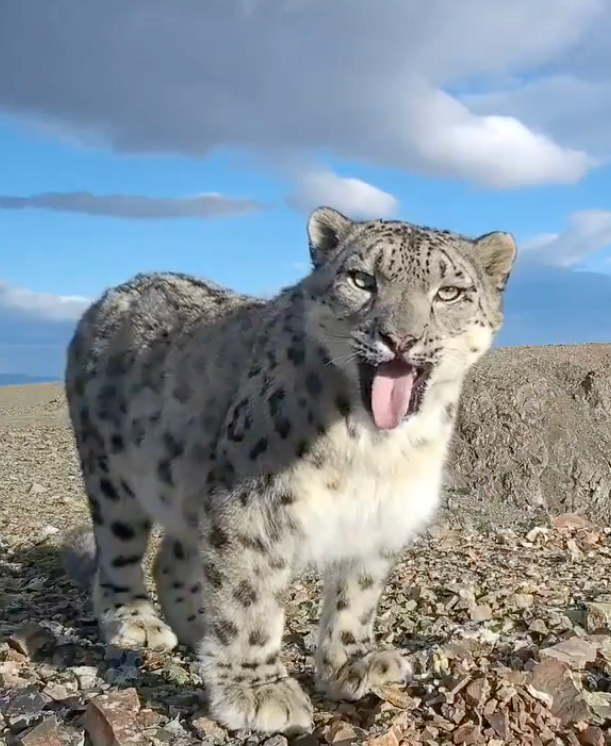
A recent example that serves as an illustration is the posting of a short video of a snow leopard caught on a trail cam. Many commenters thought the video might be AI because the animal was behaving in ways that they did not expect (although they were quickly educated by other commenters about the flehmen response in cats, along with links to the Wikipedia article on it) and because the weather didn't appear to be behaving in ways the viewer expected (also explained by other commenters). The video does has a verifiable source; but, it seems anything inspiring or outside of our everyday experience will prompt reflections about whether it's real or generated. This questioning of veracity leads us to question reality in ways that undermine our own sense of reality and this can be very destabilizing both on an individual and social level.
As journal editors, we have both a vested interest and an ethical obligation to combat the destabilizing activities of generative AI. We need to have clear expectations for authors, editors, and reviewers and we need to invest the additional time and resources to actually verify citations. We can't do this with automated tools, which will report that the generated citations are valid if they appear elsewhere in the record; we have to have humans actually look at the original sources.
We may want to move authors toward a policy of using fewer, but more impactful citations in their work
Given the additional labor costs and lack of support that many journals face (particularly in the humanities, and especially for independent journals like Kairos), we may want to move authors toward a policy of using fewer, but more impactful citations in their work. That is to say, perhaps fewer uses of what Latour (1987) would call perfunctory citations: parenthetical references that don't support a specific argument, but are used to demonstrate knowledge of the relevant literature. You see this form of citation often as a chain of references that support a well-known idea in a given field. It might be worth selecting the most salient, rather than adding to the quantity.
We also need to make sure authors know not to fully trust the literature search mechanisms that have formerly served them well, particularly as more generated citations infiltrate the scholarly record. They also must review and verify the sources they reference (which should be a given, but we know from experience that it isn't always the case). That requirement is often showing up in journal AI policies, and the stronger it can be stated the better, in our opinion.
That's the big picture: Generative AI has the potential to completely undermine the very idea of scholarship and destabilize all published research, theory, and commentary. Those are big stakes! But we also see these issues playing out in our editing and publishing processes as well. Consider the main actors in the process: authors, editors, and peer reviewers. When authors use AI but do not disclose it, they lose the trust of the editors. When reviewers use AI, they lose the trust of both the authors and the editors. And when editors use AI, they reduce trust from the other actors, but also in the larger scheme of scholarly publication as a whole. The relationships among these actors are foundational (and required) for good research and scholarship to be published and circulated, so challenges to these relationships also should be seen as a threat to the scholarly enterprise.
The move toward questioning whether AI was used (as in the snow leopard example above) also becomes a pernicious challenge in the editing process—what if an author believes that a reviewer used AI because the reviewer doesn't appear to get the author's argument, or makes suggestions the author disagrees with (and believes that no competent reviewer would suggest)? Whether the root cause is actually that the author's argument is unclear is immaterial; it's the questioning of reality that destabilizes the relationship.
We may be rapidly approaching a point at which we should assume authors have used AI even when they don't explicitly acknowledge it: a recent research article in PNAS: Applied Physical Sciences by He and Bu (2025) noted that "despite 70% of journals adopting AI policies (primarily requiring disclosure), researchers’ use of AI writing tools has increased dramatically across disciplines, with no significant difference between journals with or without policies." These researchers analyzed papers from over 5,000 journals published between 2023 and 2025, and found that of the 75,000 papers they claim use AI in their dataset, only 76 (~0.1%) explicitly disclosed AI use.
Given the now well-documented detrimental effects of AI on the environment, on the mental health of genAI users, on the critical thinking skills of students and professional users, the impact on the labor market, and the way they are used to shift capital from workers to oligarchs, we're more and more inclined to advocate for much more restrictive use guidelines for academic authors. If we are going to keep the scholarly enterprise from collapsing in upon itself due to the overuse of generative AI, we're going to need to start taking steps to safeguard it now, before it's too late.
References
He, Yongyuan, & Bu, Yi. (2025). Academic journals’ AI policies fail to curb the surge in AI-assisted academic writing. PNAS: Proceedings of the National Academy of Sciences, 123(9): https://doi.org/10.1073/pnas.2526734123
Latour, Bruno. (1987). Science in Action. Harvard University Press.